Pet Astrology for Rescue Animals: No Birth Date? No Problem
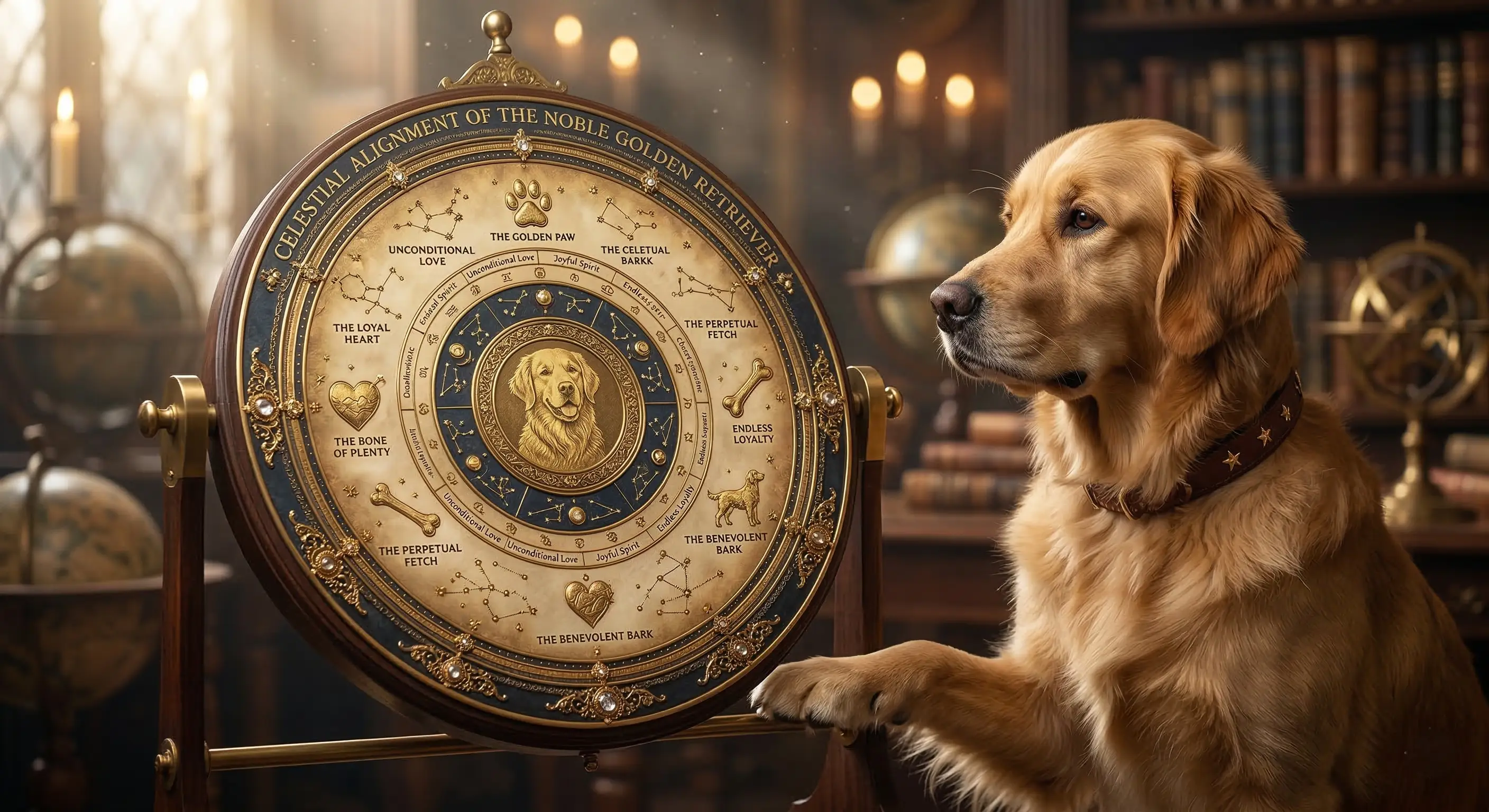
Rescue animals come with gaps: the vaccination history, the behavioral record, sometimes even a reliable approximate age. What arrives is a dog or cat who showed up at a shelter and waited. For millions of people who adopt, this means that traditional pet astrology was never an option. You need a birth date to cast a chart. If the shelter says, "around two years old, maybe," you're stuck.
This is the problem Aetris was built to solve. Before going into how it works, it helps to see exactly where the difficulty lies, because it is three problems stacked on top of each other.
A typical sceneA shelter animal listed as "approximately 18 months", with no date anywhere in the paperwork. The owners answer the behavior questions instead, and the reading describes the animal they live with. The birthday stays unknown; the character does not.
The Three Layers of the Birth Date Problem
A full natal chart in astrology requires three pieces of information: date, time, and location of birth. Each element unlocks a different layer of the chart:
Requires a birth date, accurate to within a few days. The Sun changes signs approximately every 30 days, so an approximate birth month is usually enough to get this right, unless your pet was born near a cusp.
Requires a precise birth date. The Moon changes signs every 2–3 days. Without knowing the year and month, and the age alone won't do, this is unavailable through traditional calculation.
Requires the exact birth time, accurate to within an hour. The Rising sign changes every two hours. For most pets, even those with known birth dates, this information is not available.
This means that even for people who know their dog's approximate birthday, they're working with an incomplete chart. The Moon sign requires precision that shelters rarely have. The Rising sign requires birth time that almost no one has. Conventional pet astrology, for most rescue animals, was never more than a partial picture.
What Behavioral Astrology Actually Uses
The insight behind Aetris's Soul Reading is that the chart and the behavior point at each other. If you know the behavior in sufficient detail, you can infer the chart. This is a version of what human astrologers call rectification: working backward from life events and personality data to reconstruct a probable birth time.
For pets, the behavioral signals map onto astrological placements in consistent ways. Imperfectly, since no system is perfect, but consistently enough to produce readings that owners describe as accurate in ways they didn't expect.
What the AI looks for
Attachment patterns reveal Moon sign tendencies. A dog that develops intense single-person bonds and shows behavioral disruption when that person leaves points toward Scorpio, Cancer, or Taurus Moon. A dog that recovers quickly from separation and stays curious during stress points toward Sagittarius or Gemini. These are distinct signatures.
Reactions to novelty signal Rising sign energy. The Rising sign governs the animal's first response to the unfamiliar, how they present when they encounter something new. A dog that meets strangers at the door with confidence and warmth suggests a different Rising placement than one that hangs back, observes for twenty minutes, and then decides to approach. They are different maps.
Stress behaviors illuminate Moon sign further. A dog whose anxiety manifests as destruction points toward Fire or Air Moon placements, where the energy goes outward. A dog whose anxiety manifests as withdrawal, hiding, or physical symptoms often points toward Water Moon placements, where emotion goes inward.
Social hierarchy tends to reflect Sun sign energy in dogs, since dogs live in pack structures and Sun sign influences how they navigate authority and relationships. The dog that instinctively manages other animals in a household, that establishes itself without aggression, often carries Capricorn or Scorpio signatures. The dog that defers immediately and builds relationships through play tends toward Libra or Sagittarius Sun energy.
What You Get from a Behavioral Chart
A chart reconstructed from behavioral data isn't the same as a chart calculated from an exact birth time, and the app doesn't pretend otherwise. Each sign gets its own short act of questions (four for the Sun, three for the Moon, three for the Rising), and an answer you can't give honestly ("Hard to say") simply doesn't vote.
For most rescue animals, this is still significantly more than their owners had. And for the placements with higher confidence, often the Moon sign, which behavioral data can narrow down considerably, the accuracy tends to surprise people.
The more detailed the behavioral data you provide, the more refined the reading. Aetris asks about sleep patterns, reaction to specific stimuli, social preferences, how the animal behaves during transitions, and what their relationship with food looks like, because each of these narrows the probability distribution of what the chart most likely looks like.
Why It Matters Beyond Curiosity
Rescue animals often arrive with behavioral patterns that seem arbitrary or opaque. The dog that's wonderful with everyone except men in hats. The cat that chooses one specific person in a household of four and ignores the rest. The dog that was fine for three months and then started resource-guarding out of nowhere when the routine changed.
These patterns aren't random, and they usually aren't damaged. They're often the animal's natal chart in action: a Moon-in-Taurus dog destabilized by a routine disruption, a Scorpio-Rising cat selecting their trusted person with characteristic selectivity, a Cancer-Sun dog reacting to an emotional shift in the household they couldn't name but absolutely felt.
Having a framework, even an approximate one, changes how owners respond. "My dog isn't broken" is a different starting point than "something is wrong." It doesn't replace behavioral training or veterinary care. But it adds a layer of understanding that, for a lot of people, reframes their relationship with an animal they chose without knowing who they were choosing.
Frequently Asked Questions
What is pet astrology?
Pet astrology is the practice of calculating and interpreting a pet's natal chart, their Sun, Moon, and Rising signs, based on their birth date, time, and location. It's used to understand a pet's personality, emotional needs, stress responses, and compatibility with their owner. The same astrological system used for humans applies to animals.
Can I do pet astrology for a rescue animal without a birth date?
Yes. Aetris's Soul Reading infers probable natal placements from behavior when no birth date is available. Ten questions about attachment, stress responses, reactions to novelty and social behavior narrow down which Sun, Moon and Rising signs best match the animal's observed personality, with no birth certificate required.
How accurate is pet astrology?
Pet astrology accuracy varies by placement. Sun sign readings, which require only an approximate birth month, are broadly accurate for personality tendencies. Moon sign readings require a precise birth date and are more specific. Readings for rescue pets are worked out from behavior, and they are a reading of how the animal lives rather than a recovered birthday.
What information do I need to get a pet astrology reading?
For a standard reading: your pet's birth date, approximate birth time, and birth location. For rescue pets with no birth history: behavioral observations about their attachment style, stress responses, reactions to strangers, and social preferences. Aetris works from ten behavior questions and uses the birth date when you have it.
Build Your Rescue Pet's Birth Chart
No birth date required. Enter what you know about your pet's behavior, and Aetris builds their natal chart using AI rectification. Available free on iPhone and Android.
Get the App Free Try the free Calculator →